


How To Fix Drafting Errors Once a Patent Is Granted in China
 22.Oct.2024


When drafting a patent, it is not uncommon for slip-ups, like typos, grammatical hiccups or translation mishaps to sneak in. Although they seem trivial, errors like these can alter the patent’s scope of protection. The application process provides many chances to tidy up such obvious mistakes. But what happens once a patent has been granted? Can the patent holder still make corrections?
According to Chinese patent law, once a patent has been granted, the only route for making amendments is through the patent invalidation proceeding. Even this is only possible under a strict set of amendment rules. However, the legal frameworks in regions like the United States, Europe, Japan and South Korea are more accommodating of post-grant tweaks.
In the United States, patent holders can initiate voluntary amendments post-grant through what is known as ‘reissue’. This allows for alterations to be made to the specification, drawings or claims as long as no new technical features are introduced. Broadened claims in scope may also be made in reissue but only within two years of the grant of the original patent. Europe offers a similar level of flexibility: here patent holders can request amendments or even a revocation of their claims after the grant has been made. Meanwhile, in Japan, patent holders may request an Amendment Trial (訂正審判), in which they can refine their specifications, claims or drawings. South Korea echoes this flexibility with a comparable procedure.
Such post-grant amendment freedoms are absent in China. Under the current Chinese Patent Examination Guidelines, amendments during invalidation proceedings are strictly limited to patent claims for inventions or utility models. These amendments should directly address the grounds for invalidation or defects identified by the Reexamination Panel, along the following principles: (1) not altering the original subject matter of the claims; (2) not expanding the scope of protection beyond what was originally granted; (3) not exceeding the disclosures in the original specification; and (4) generally avoiding the addition of technical features that were not included in the originally granted claims. Within the Guidelines, specific allowable amendments involve deleting claims, removing technical solutions, further limiting the claims or correcting obvious errors. These are amendments without prejudice, like fine-tuning a recipe without changing its essential flavours.
Patent holders may correct obvious errors during invalidation proceedings, but what counts as an obvious error? This chapter presents four cases to help understand what such errors are and how they can be fixed on time. Hopefully, it will serve as an inspiration in the future for similar amendments to granted patents.
Case study 1: timing for correcting obvious errors (Invalidation Decision No. 44567)
The Guidelines allow patent holders to amend their claims – beyond mere deletions – at three specific moments: (1) in response to an invalidation request; (2) in response to additional invalidation grounds or new evidence from the petitioner; and (3) in response to new issues or evidence introduced by the Patent Reexamination Board that the petitioner did not mention. Essentially, patent holders may only correct obvious errors in claims at these moments. Since petitioners may not always submit supplementary comments, prompt action is key. It is always wise, therefore, to address any obvious errors in the response to the invalidation request.
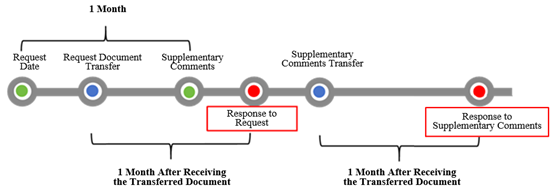
Fig 1. Timing for correcting obvious errors
Case study 1 involves a skipping rope connector. In the granted patent, Claim 1 erroneously describes as a feature that ‘the reset spring (5) is located in the groove (401)’. However, the specifications and drawings state that ‘the reset spring (5) is located in the sleeve (2)’. During the oral hearing, the patent holder argued that this was an obvious error and asked to correct it. However, the timing of this request did not meet the Guidelines so it was not accepted by the panel. Although the specification contains a description in line with Claim 1, the details in the embodiments and corresponding drawings differed, resulting in a defeat in Claim 1 for lack of support from the specification. Consequently, Claim 1 was invalidated.
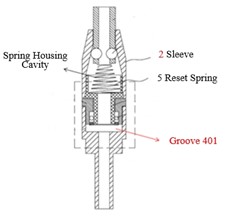
Fig 2: Supplementary drawing for case study 1
This case involves a utility model patent. Since a utility model can be granted after a preliminary examination, it holds a time advantage. However, obvious errors may still slip through unnoticed, missing the chance for correction. As seen in this case, if such errors are overlooked during the prosecution phase, it is advisable to be quick during the invalidation phase. Failing to do so will not only result in the amendments being rejected but may also unnecessarily expose the patent to a risk of invalidation if the claims clash with the written description.
In this case study, the obvious error was not accepted owing to incorrect timing. In practice, even when the timing requirement is met, the panel will still need to determine whether the alleged errors comply with the criteria set out in the Guidelines. Cases studies 2 to 4 explore the criteria for such evaluation.
Case study 2: correcting obvious errors in a PCT application entering the national phase (Invalidation Decision No. 46741)
The Guidelines define obvious errors recognisable by those skilled in the art as grammatical, textual and typographical errors. Corrections to these errors must be the only clear solution evident from the overall context of the description to those skilled in the art. Recognising and correcting obvious errors in claims during invalidation must meet the requirements of both ‘obviousness’ and ‘uniqueness’.
Case study 2 focuses on a wireless communication system and is a PCT application entering the national phase in China. Here, the patent holder tried a little wordplay, swapping ‘intra-frame frequency band’ for ‘intra-frame band’ in Claims 4 and 6, and pitched this as fixing an obvious error. Upon review, the panel found that the original ‘intra-frame frequency band’ in Claims 4 and 6 did not contain any clear grammatical, textual or typographical errors. The new term, ‘intra-frame band’, did not relate to any specific technical language, nor was it clearly defined in the specification. This was not seen as the only correct interpretation based solely on the specification’s overall context and content – other interpretations or amendments were possible. For these reasons, the panel concluded that the alleged obvious error did not meet the criteria set out in the Guidelines, and so the amendments to Claims 4 and 6 could not be considered corrections of an obvious error.
Case study 2 makes it clear that most changes will likely be accepted during the prosecution phase, as long as they do not exceed the original scope. However, the requirements are stricter during the invalidation phase. Case study 3 will show when such strict corrections are allowed.
Case study 3: correcting of obvious errors in a PCT application (Invalidation Decision No. 564832)
Case study 3 revolves around a method used by a mobile terminal for a PCT application entering the national phase in China. In response to an invalidation request, the patent holder changed ‘system frame number’ to ‘sub-frame number’ in some dependent claims, viewing it as a proper correction of an obvious error. Upon review, the panel noted that the original PCT application, including its published description and claims along with the Chinese translation, only mentioned the sub-frame number (SFN). After a thorough review of the original application documents, this was the only logical interpretation by those skilled in the art. Moreover, the concept of hopping between system frame numbers was considered technically irrational. Ultimately, the invalidation decision recognised the amendment from ‘system frame number’ to ‘sub-frame number’ as a legitimate fix for an obvious error.
In case study 3, the application at issue is a PCT application that has entered the Chinese national phase. Like any other amendments in this phase, the obvious error amendment will also be based on the international publication. If those skilled in the art can unambiguously determine the direction of the correction from reading the international publication, there is a strong indication to the panel that the amendment is likely allowable.
While the Guidelines clearly define the provisions for amending ‘obvious errors’, in actual judicial practice, the CNIPA and various courts differ in their interpretations of both ‘obviousness’ and ‘uniqueness’.
Case Study 4: criteria for obvious errors (Invalidation Decision No. 52169)
Case study 4 concerns a method for securing the stator casing of an electric motor to a bracket via interference in a motorised wheel. The petitioner pointed out in their supplementary comments that Claims 1 and 9 lacked support from the description. Within the response period, the patent holder amended Claim 1 from ‘the stator casing (15) is inserted into the correspondingly shaped annular part (18), which extends from the bracket (12) and is fixed to the bracket by interference’ to ‘the stator casing (15) is inserted into the correspondingly shaped annular part (18) and is fixed to the bracket by interference, with the annular part extending from the bracket (12)’. They also changed Claim 9 from ‘characterized in that, the interference is achieved by cold keying, by inserting the casing of the electric motor (11) into the annular part (18) of the bracket (12) and applying a preset pressure’ to ‘characterized in that, alternatively, the interference is achieved by cold keying, by inserting the casing of the electric motor (11) into the annular part (18) of the bracket (12) and applying a preset pressure’. The patent holder argued that these changes corrected obvious errors in Claims 1 and 9, and submitted related family patent documents as evidence for the amendments.
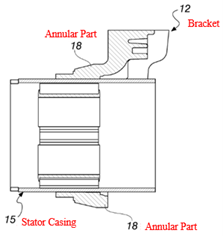
Fig 3: Supplementary drawing for case study 4
Although the timing of the claim amendments met the Guidelines’ requirements, the panel ruled that the changes did not constitute ‘obvious textual errors, punctuation mistakes, grammatical errors, typographical errors, or editorial mistakes’. They noted that ‘amendments that could alter the scope of claim protection do not qualify as obvious errors’, and ‘related patent documents in the family is not a valid move to correct translation errors in the claims’. In this case, the patent holder attempted to square a substantive mismatch with the description in Claim 1 by labelling it an obvious error. This stretches the concept of obvious errors and could open almost anything up to correction. Predictably, the patent holder’s amendments were not accepted. The invalidation request was reviewed based on the text of the granted patent, and the claim was invalidated owing to its shaky footing in the description.
The court of first instance upheld the opinions of the CNIPA, but these were ultimately overturned by the Supreme Court. It reasoned that anyone skilled in the art could observe the errors or ambiguities in content defined by Claim 1 of the patent and that Claim 1 should only arrive at one single correct interpretation in light of the claims, description and drawings. Therefore, without extension beyond the original content or scope of protection, the patentee’s corrections to Claim 1 constitute proper corrections to an ‘obvious error’ and should be accepted accordingly.
The Supreme Court held that in determining ‘whether an error is obvious’, the original intended meaning of the claims should be reconstructed based on a holistic understanding of the claims, description and drawings, without assuming any change in the scope of protection. Therefore, the challenged decision and the lower courts erred in using the possibility of potential changes to the scope of protection as a basis for determining whether an error is ‘obvious’ and incorrectly relied solely on the wording of the claims in arriving at the scope of protection.
Case study 4 shows that the CNIPA and various courts hold different opinions on what constitutes an ‘obvious error’. Finally, the decision by the Supreme Court provides guidance and clarifies that the original intent of the claims should be restored based on an overall understanding of the application to arrive at ‘obviousness’ and ‘uniqueness’ determination. Although the final decision supported the patent holder’s corrections, it highlighted the significant time and costs involved. Tackling such errors during the initial patent application and not letting them carry over could greatly reduce future complications.
Conclusion
These four cases show that there are tight limitations in the invalidation phase for when patent holders can correct obvious errors, and the criteria for evaluating ‘obviousness’ and ‘uniqueness’ are very exacting. Even if corrections are ultimately permitted, they may come at a significant cost in time and money. Applicants should therefore strive for precision during the drafting stage to sidestep such errors. It pays to conduct thorough checks throughout the application process.
If an issue is spotted it should be fixed as quickly as possible to minimise the risks associated with later amendments. This is not just about playing it safe; it is about smoothing the path to a strong patent. Ensuring accuracy from the start not only streamlines the patent process but also strengthens claims against future legal challenges.